
La ruta de la lana
Project Focus:
Creative direction, editorial design, photo editing
Year:
Digital book 2019 - Physical book 2022
Location :
Nobsa, Boyaca
La Ruta de la Lana is an editorial project born from a research-creation initiative led by Taller 11 the research group of the Universidad Pedagógica y Tecnológica de Colombia (Pedagogical and Technological University of Colombia – UPTC). Known for its focus on design, art, and community, the group developed a social cartography of traditional textile practices in Nobsa, Boyacá, in direct dialogue with the ancestral knowledge of local weavers. As creative director and designer, my role was to translate this investigative universe into a sensitive, contemplative editorial object: a photobook that breathes at the rhythm of the loom and accompanies the homonymous documentary—serving as its visual and conceptual origin. The publication offers a quiet and unhurried experience, built from portraits, landscapes, and objects filled with memory, arranged through a visual narrative that privileges attentive observation over literal explanation. Each page becomes a thread, and each spread a loom, where the everyday takes on symbolic and emotional meaning.


The photobook was conceived as a tactile object that extends the experience of the documentary. Subtle typographic hierarchies, generous margins, and spacious compositions were used to let the reader breathe from page to page. Materiality—paper, binding, texture—was treated as part of the narrative: each sheet as a thread, each spread as an open loom. The images are grouped by symbolic affinity rather than chronological logic, allowing for a free, subjective, and emotional reading. The editorial design followed the principle of not imposing a rhythm, but rather inviting the reader to inhabit the time of the weave.


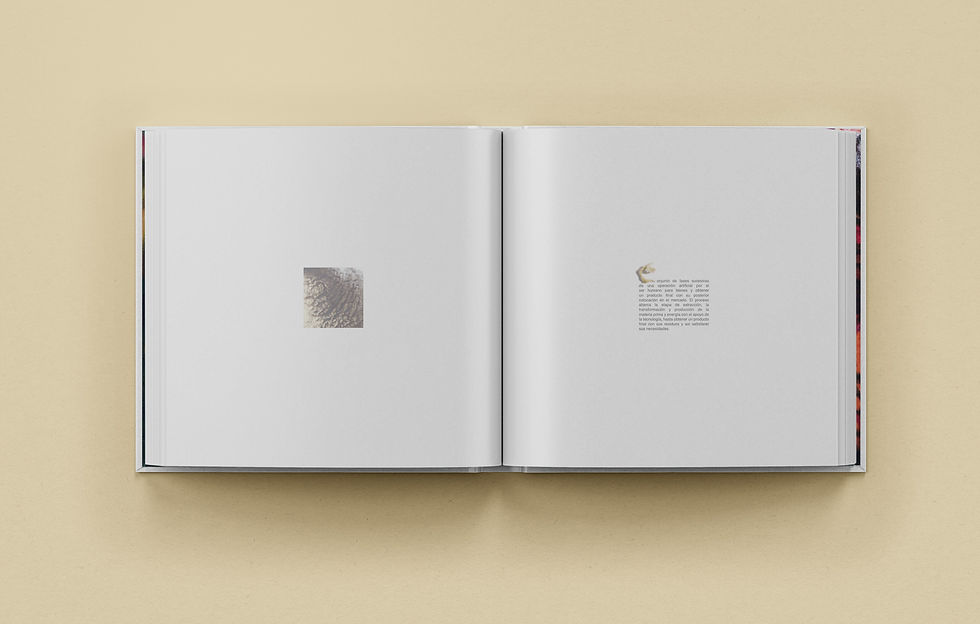


The book was printed in a limited edition and has been integrated as a pedagogical resource in universities, book fairs, and cultural spaces. Its creation not only accompanies the homonymous documentary but also precedes it—serving as both a conceptual and aesthetic inspiration for its later development. This project demonstrates how editorial design can translate research, living memory, and visual storytelling into a single object, where every decision—from the format to the sequence of images—is a gesture of listening and care.
You can watch the full documentary project here: